

┌──────────────────────────────────────────────────────┐
QUICK SUMMARY
Teenage girls who participate in sports such as soccer, basketball, lacrosse, and gymnastics face a higher risk of anterior cruciate ligament (ACL) injuries. These injuries frequently occur during sudden stops, changes in direction, or awkward landings, even without physical contact.
Research has identified especially high ACL injury rates among female athletes during adolescence. Recognizing warning signs, incorporating injury prevention exercises, and obtaining timely orthopedic care can help protect a young athlete’s long-term knee health. At Academy Orthopedics, our sports medicine specialists provide comprehensive evaluations, conservative treatment options, ACL reconstruction when appropriate, and individualized rehabilitation planning for athletes throughout northern New Jersey.
└──────────────────────────────────────────────────────┘
Why ACL Injuries Are Becoming a Major Concern for Teenage Girls
For parents watching their daughters compete in soccer, basketball, lacrosse, or other school sports, few injuries are more concerning than a torn anterior cruciate ligament, commonly called the ACL. A single awkward landing, sudden pivot, or change in direction can cause a serious knee injury that affects an athlete’s ability to walk comfortably, participate in school activities, and return to competitive sports.
At Academy Orthopedics, we understand how important sports participation is to young athletes throughout northern New Jersey. From high school soccer programs in Wayne and Clifton to basketball, lacrosse, and competitive sports in Paramus, Montclair, West Orange, and neighboring communities, teenage athletes dedicate considerable time to training, developing their skills, and competing with their teammates.
Unfortunately, ACL injuries have become a growing concern, particularly among adolescent female athletes. Research published in JAMA Pediatrics and reported by the University of North Carolina School of Medicine in 2017 identified a 59% increase in ACL reconstruction procedures among girls ages 13 to 17 over the study’s 13-year observation period. Although this finding is not a measure of current annual injury rates, it highlights a significant long-term concern in adolescent sports medicine.
Other research has found that female athletes may experience ACL injuries at rates approximately two to eight times higher than male athletes in comparable sports, depending on the population and activities studied.
These findings raise important questions for families. Why are teenage girls particularly vulnerable to ACL injuries? Can these injuries be prevented? What symptoms should parents recognize, and what happens if a daughter tears her ACL?
Understanding the answers can help families make informed decisions about athletic participation, injury prevention, and orthopedic treatment.
What Is the ACL, and Why Is It Important for Knee Stability?
The anterior cruciate ligament is one of four major ligaments responsible for stabilizing the knee joint. It connects the thighbone, known as the femur, to the shinbone, or tibia, and helps prevent excessive forward movement and rotation of the shinbone.
The ACL plays an especially important role during activities that require sudden movements, such as cutting across a soccer field, changing direction during basketball, or landing after a jump.
When the ACL is functioning properly, it helps maintain knee stability during these demanding movements. When the ligament becomes stretched or torn, the knee may feel unstable, particularly during activities involving rotation or rapid changes in direction.
ACL injuries range from mild sprains to complete tears. A partial tear may preserve some ligament function, while a complete tear can significantly affect knee stability.
Unlike a minor muscle strain, a complete ACL tear generally does not heal back together reliably on its own. Treatment focuses on restoring function and stability through appropriate rehabilitation, with surgical reconstruction recommended for certain patients based on their injury, activity level, skeletal maturity, and athletic goals.
For teenage athletes who hope to continue playing competitive sports, an accurate diagnosis and individualized treatment plan are particularly important.
Why Are Female Teenage Athletes More Likely to Tear Their ACL?
The higher rate of ACL injuries among female athletes is not explained by one specific cause. Researchers have identified several anatomical, biomechanical, developmental, and environmental factors that may contribute to the difference.
One important consideration involves the way an athlete moves while jumping, landing, decelerating, or changing direction. Some athletes demonstrate a movement pattern called dynamic knee valgus, in which the knee moves inward relative to the hip and foot during weight-bearing activity.
This movement can increase stress on the ACL, especially when combined with sudden rotation or forceful deceleration.
Differences in muscle strength, coordination, and neuromuscular control may also influence injury risk. For example, inadequate hip and hamstring strength or difficulty controlling lower-extremity alignment during landing can place additional demands on the knee.
Anatomical characteristics, including differences in the shape of the knee joint and the space surrounding the ACL, may contribute to individual susceptibility. Researchers are also investigating hormonal influences on ligament properties and neuromuscular function, although the relationship between menstrual-cycle changes and ACL injury risk remains complex and not fully established.
These factors should not be interpreted as meaning female athletes are inherently unable to tolerate demanding sports. Many important risk factors involve movement patterns, conditioning, and training practices that can be improved.
Appropriate strength development, landing mechanics, balance training, and sport-specific conditioning can help athletes build greater control and potentially reduce their risk of injury.
Why Ages 13 to 17 Are Especially Important for ACL Injury Prevention
Adolescence is a period of considerable physical development. Between approximately 13 and 17 years of age, athletes may experience rapid changes in height, body proportions, muscle strength, and coordination.
During growth spurts, an athlete’s movement patterns may temporarily change as the body adapts to longer limbs and a shifting center of gravity. These changes can influence balance, landing mechanics, and control during demanding athletic movements.
At the same time, many teenagers begin participating in more competitive sports programs. Practices become more frequent, competition intensifies, and athletes may participate in school teams, travel programs, private training, and offseason tournaments.
For families throughout Passaic, Bergen, Essex, and Morris counties, it is common for motivated young athletes to maintain demanding schedules that include several practices and games each week.
While consistent physical activity offers substantial health benefits, increasing training intensity without appropriate recovery and conditioning can contribute to fatigue and reduced movement quality.
Parents should recognize that fatigue may affect an athlete’s ability to maintain proper form during cutting, jumping, and landing.
Adolescence therefore represents an important opportunity to establish injury prevention habits before competitive demands increase further.
Why Soccer, Basketball, and Lacrosse Present Significant ACL Risks
Sports that require frequent pivoting, cutting, jumping, and rapid deceleration place substantial demands on the ACL.
Soccer presents particular challenges because players repeatedly accelerate, stop, turn, and change direction while responding to opponents and the movement of the ball. An ACL injury may occur when a player plants one foot and rotates suddenly or attempts to change direction while the knee is in a vulnerable position.
Basketball involves similar movement demands. Players frequently jump for rebounds, land in crowded spaces, and transition quickly between offensive and defensive movements.
Lacrosse, another popular sport among teenage girls in northern New Jersey, combines running, cutting, pivoting, and rapid changes in direction.
Gymnastics, volleyball, and other jumping-intensive sports can also place considerable stress on the knee during landing.
An important detail for parents is that many ACL injuries occur without direct contact from another player. An athlete may tear the ligament while landing from a jump or changing direction on an otherwise routine play.
This explains why injury prevention must extend beyond teaching athletes to avoid collisions. Proper movement mechanics are essential even during noncontact activities.
Early Warning Signs of an ACL Tear Parents Should Recognize
ACL injuries often produce noticeable symptoms immediately after the event. However, the severity of pain does not always reflect the extent of ligament damage.
Some athletes experience substantial discomfort and cannot continue playing. Others may feel relatively little pain after the initial injury but notice significant instability when attempting to walk or turn.
Common symptoms that may indicate an ACL injury include:
- A popping sound or sensation inside the knee at the time of injury.
- Rapid swelling, often developing within the first several hours.
- Knee instability or a feeling that the knee may give out.
- Difficulty bearing weight or walking normally.
- Reduced ability to straighten or bend the knee.
- Pain, tenderness, or discomfort when attempting to pivot.
Although these symptoms are frequently associated with ACL tears, they can also occur with other knee injuries, including meniscus tears, ligament sprains, fractures, and kneecap injuries.
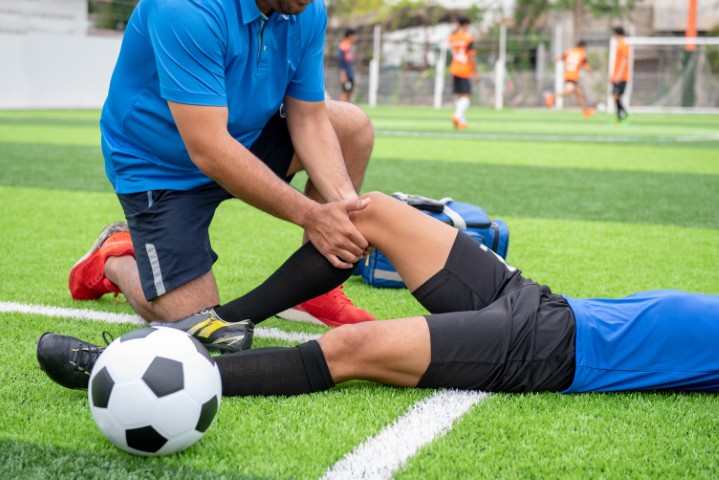
A teenager who experiences sudden swelling, instability, or significant pain after a sports-related knee injury should stop participating immediately and receive a medical evaluation.
Parents should not assume that an injury is minor simply because their daughter can still walk.
What Should Parents Do Immediately After a Suspected ACL Injury?
When a teenage athlete injures her knee during a game or practice, the first priority is preventing additional damage.
The athlete should stop participating immediately rather than attempting to finish the game or determine whether the knee will improve with continued movement.
Resting the joint, applying ice, using appropriate compression, and elevating the leg may help manage early swelling and discomfort.
The athlete should avoid running, jumping, pivoting, or attempting to test the knee’s stability.
If walking is painful or the knee feels unstable, limiting weight-bearing until evaluation may be appropriate.
Prompt orthopedic assessment is important because ACL tears can occur alongside meniscus injuries, cartilage damage, or other ligament injuries.
If the knee appears deformed, the foot becomes cold or numb, there is severe uncontrolled pain, or the athlete cannot bear weight following significant trauma, urgent emergency evaluation is appropriate.
For families in Wayne, Clifton, Paramus, and surrounding New Jersey communities, obtaining a timely diagnosis can help prevent avoidable delays in treatment and recovery.
How ACL Tears Are Diagnosed in Teenage Athletes
At Academy Orthopedics, evaluating a suspected ACL injury begins with understanding how the injury occurred and identifying the athlete’s current symptoms.
Our sports medicine specialists assess knee swelling, tenderness, range of motion, stability, and overall joint function.
Specific physical examination techniques can help determine whether the ACL may be damaged. The Lachman test, for example, evaluates abnormal forward movement of the shinbone relative to the thighbone and is commonly used when an ACL tear is suspected.
Additional evaluation may be necessary to assess the meniscus, surrounding ligaments, cartilage, and other knee structures.
X-rays may be recommended to identify fractures or other bone-related injuries. Although the ACL itself is not visible on a standard X-ray, imaging can help rule out associated injuries.
An MRI may be recommended when ligament or meniscus damage is suspected because it provides detailed images of the soft tissues within the knee.
In adolescent patients, our evaluation also considers whether the bones are still growing. The status of the growth plates can influence treatment decisions, particularly when surgical reconstruction is being considered.
A careful assessment helps establish the extent of the injury and supports an individualized recovery plan.
Can a Teenage Girl Recover From an ACL Tear Without Surgery?
Not every ACL injury requires surgery. Appropriate treatment depends on whether the ligament is partially or completely torn, the degree of knee instability, associated injuries, skeletal maturity, and the athlete’s activity goals.
Some patients with partial tears and relatively stable knees may respond to a structured rehabilitation program.
Conservative management can include activity modification, appropriate bracing, strengthening exercises, physical therapy, and gradual restoration of movement.
However, young athletes who participate in sports requiring frequent pivoting and cutting may continue to experience instability if the ACL cannot adequately support the knee.
Repeated episodes of instability can increase the risk of additional meniscus or cartilage injury.
For this reason, surgical reconstruction may be recommended for active teenage athletes with complete ACL tears, substantial instability, or certain associated injuries.
The decision should be made through a careful discussion of the risks, benefits, available options, and the athlete’s long-term goals.
ACL Reconstruction for Teenage Female Athletes
ACL reconstruction is a surgical procedure that replaces the damaged ligament with a graft, allowing the knee to regain stability as the graft incorporates and rehabilitation progresses.
The procedure is commonly performed using arthroscopic techniques, which involve small incisions and specialized instruments.
The graft may come from the patient’s own tissue, such as a portion of the quadriceps tendon, patellar tendon, or hamstring tendon. Graft selection is particularly important in young, active athletes because reinjury risk and other outcomes can vary.
For teenagers whose growth plates remain open, the surgeon must consider skeletal maturity and select a technique that protects developing bone structures.
The goal of reconstruction is not simply to repair an injured knee. Treatment should support long-term joint function, reduce episodes of instability, and help the athlete work toward returning to her preferred activities.
At Academy Orthopedics, our orthopedic specialists provide ACL reconstruction and individualized treatment planning for sports-related knee injuries.
What Does Recovery After ACL Reconstruction Look Like?
Recovery from ACL reconstruction requires patience, consistency, and structured rehabilitation.
Although surgery restores the knee’s ligament structure, the athlete must also rebuild strength, balance, coordination, confidence, and sport-specific movement skills.
Early rehabilitation generally focuses on controlling swelling, restoring knee extension, improving range of motion, and activating the surrounding muscles.
As recovery progresses, physical therapy incorporates strength development, balance exercises, and progressively more demanding functional movements.
Later phases may include running progression, jumping mechanics, cutting drills, and controlled movements that resemble the athlete’s sport.
Many adolescents require at least nine months of rehabilitation before returning to unrestricted athletic participation. For sports involving frequent pivoting, a return closer to 12 months or later may be advisable depending on individual progress and injury risk.
Return-to-sport decisions should not be based on time alone. Strength, knee stability, functional testing, movement quality, and psychological readiness are important considerations.
Returning too early can increase the likelihood of another ACL injury.
How Parents and Coaches Can Help Prevent ACL Injuries
One of the most encouraging findings in sports medicine is that many ACL injuries may be preventable through structured neuromuscular training.
These programs teach athletes to improve body control during jumping, landing, cutting, and decelerating.
Effective injury prevention programs often combine strength development, balance training, agility exercises, and sport-specific movement education.
For example, a young soccer player may learn to land with appropriate hip and knee alignment rather than allowing the knees to collapse inward.
A basketball player may practice controlled deceleration and balanced landings after rebounds.
Research supports consistent implementation of injury prevention programs rather than relying on occasional exercises.
Programs such as FIFA 11+ and the Prevent Injury and Enhance Performance (PEP) program provide structured approaches that teams can incorporate into regular training.
For many school and recreational sports programs, appropriately supervised injury prevention exercises can be completed in approximately 15 to 20 minutes.
Parents can also encourage their daughters to develop strength in the hips, quadriceps, hamstrings, and core while maintaining appropriate rest and recovery.
These exercises do not eliminate all ACL injuries, but consistent participation can meaningfully reduce risk.
Why Proper Conditioning and Recovery Matter
Injury prevention extends beyond what happens during a warm-up.
Teenage athletes benefit from balanced training programs that gradually increase intensity while allowing sufficient recovery between demanding activities.
Athletes who participate in multiple leagues or compete year-round may have fewer opportunities to recover from repetitive physical stress.
Fatigue can influence coordination, reaction time, and movement quality, particularly toward the end of practices and games.
Adequate sleep, hydration, nutrition, and recovery time support athletic performance and overall health.
Parents should also pay attention when their daughters repeatedly complain of knee discomfort, unusual fatigue, or difficulty maintaining their normal movement patterns.
Persistent symptoms should not automatically be dismissed as ordinary soreness from training.
An individualized orthopedic or sports medicine evaluation may be beneficial when symptoms continue or interfere with athletic participation.
The Emotional Impact of ACL Injuries on Young Athletes
For a teenager, an ACL tear can affect far more than physical mobility.
An athlete may suddenly lose the opportunity to compete with teammates, participate in an important tournament, or pursue personal goals established through years of training.
The recovery process may involve frustration, anxiety, reduced confidence, and concerns about returning to previous performance levels.
These challenges are especially significant for athletes who strongly identify with their sports participation.
Parents can support recovery by encouraging realistic expectations, celebrating rehabilitation milestones, and helping their daughters remain socially connected with teammates and coaches.
Maintaining open communication with the medical team can also help families understand what progress should look like.
When anxiety, low mood, or fear of reinjury becomes persistent or interferes with daily functioning, additional mental health support may be helpful.
Successful recovery should address both physical healing and the athlete’s confidence in returning to activity.
Long-Term Knee Health After an ACL Injury
An ACL tear can have consequences that extend beyond a single sports season.
Individuals who experience significant ligament injuries face an increased lifetime risk of additional knee injuries and post-traumatic osteoarthritis.
This risk may be influenced by associated meniscus damage, cartilage injuries, recurrent instability, and other factors.
Even after successful reconstruction, maintaining lower-extremity strength and practicing appropriate movement mechanics remain important.
A return to sports should therefore be viewed as part of a longer process of protecting knee health.
For young athletes throughout northern New Jersey, establishing healthy training habits during adolescence can provide benefits that extend into adulthood.
Sports Medicine and ACL Treatment at Academy Orthopedics
At Academy Orthopedics, we provide comprehensive orthopedic and sports medicine care for patients throughout northern New Jersey.
Our team includes board-certified orthopedic specialists with expertise in sports-related injuries, including ACL tears, meniscus injuries, fractures, ligament damage, and other conditions affecting the knee.
Our services include orthopedic consultations, physical examinations, diagnostic evaluation, conservative treatment planning, knee arthroscopy, ACL reconstruction, and rehabilitation guidance.
We also provide treatment for additional orthopedic conditions involving the hip, knee, shoulder, and other joints.
When treating athletes with knee injuries, our goal is to develop a personalized plan that reflects the extent of the injury, the patient’s age, functional needs, and desired activities.
Our physicians work to help patients understand their diagnosis and treatment options so they can make informed decisions.
Families can access Academy Orthopedics locations in Wayne, Clifton, Totowa, Paramus, West Orange, Glen Ridge, and Morristown. These offices help us serve patients from surrounding communities throughout Passaic, Bergen, Essex, and Morris counties.
Whether a teenage athlete has recently experienced a knee injury or needs an evaluation for ongoing instability, our sports medicine team is committed to helping patients pursue a safe and informed recovery.
Helping Northern New Jersey Teen Athletes Stay Active and Healthy
Teenage girls deserve the opportunity to participate confidently in the sports they love without unnecessary injury risks.
Although ACL tears remain a significant concern, families are not powerless to address them. Recognizing warning signs, supporting appropriate conditioning, encouraging consistent injury prevention training, and seeking timely orthopedic care can make an important difference.
For athletes who experience an ACL injury, individualized treatment and rehabilitation can support a return to activity while prioritizing long-term knee health.
At Academy Orthopedics, we are committed to helping young athletes and their families navigate sports injuries with education, personalized care, and evidence-based treatment options.
If your daughter has experienced a knee injury, persistent swelling, instability, or pain during sports, contact Academy Orthopedics to schedule an orthopedic evaluation and learn more about the treatment options available.
Frequently Asked Questions About ACL Tears in Teenage Female Athletes
1. Why are teenage girls more likely to tear their ACL than boys?
Teenage girls have higher ACL injury rates than boys in certain comparable sports due to a combination of anatomical, biomechanical, developmental, and environmental factors. Differences in landing mechanics, lower-extremity muscle control, and knee alignment may contribute to injury risk. Hormonal and anatomical influences are also being studied. Appropriate strength training and neuromuscular conditioning can help address several modifiable risk factors.
2. What sports have the highest ACL injury risk for teenage girls?
Soccer, basketball, lacrosse, and gymnastics are among the sports associated with elevated ACL injury risk among adolescent female athletes. These activities frequently involve sudden changes in direction, jumping, pivoting, or rapid deceleration. Athletes who participate in these sports may benefit from structured injury prevention training.
3. How can I tell if my daughter has torn her ACL?
Common warning signs include a popping sensation in the knee, rapid swelling, instability, difficulty walking, and reduced range of motion. Some teenagers may also experience substantial pain immediately after the injury. However, symptoms vary, and an ACL tear cannot be reliably confirmed without a medical evaluation. If your daughter experiences these symptoms after a sports injury, she should stop playing and receive appropriate orthopedic care.
4. Can a teenager walk with a torn ACL?
Yes. Some teenagers can walk after tearing their ACL, especially after the initial pain and swelling decrease. However, the ability to walk does not mean the ligament is intact or the knee is stable. Continuing to participate in sports without proper evaluation may increase the risk of additional injuries. A sports medicine specialist can assess knee stability and determine the appropriate next steps.
5. Does every ACL tear in a teenage athlete require surgery?
No. Some partial ACL tears and injuries involving relatively stable knees may be treated without surgery. However, complete ACL tears in athletes who participate in pivoting sports often require consideration of reconstruction, particularly when instability is present. Treatment depends on the severity of the injury, associated knee damage, skeletal maturity, and the athlete’s goals.
6. How long does it take a teenage girl to recover from ACL surgery?
Recovery commonly requires at least nine months, and some athletes may need 12 months or longer before returning to competitive sports involving cutting and pivoting. Recovery depends on healing, strength restoration, functional testing, and the individual rehabilitation process. Returning too quickly can increase the risk of another injury, so clearance should come from the treating medical team.
7. Can ACL injuries in teenage girls be prevented?
Not every ACL injury can be prevented, but research shows that structured neuromuscular training can reduce injury risk. Programs that emphasize strength, balance, landing technique, agility, and body control are particularly valuable for athletes participating in high-risk sports. Consistency is essential, and coaches should integrate these exercises into regular practices rather than treating them as occasional activities.
8. Can a teenage girl tear her ACL again after reconstruction?
Yes. Young athletes who return to competitive sports after ACL reconstruction have a meaningful risk of experiencing another ACL injury, either in the reconstructed knee or the opposite knee. Completing rehabilitation, meeting return-to-sport criteria, rebuilding strength, and continuing injury prevention training can help reduce this risk. Families should avoid rushing the return-to-play process.
9. Where can parents find ACL injury treatment for teenage athletes in northern New Jersey?
Academy Orthopedics provides sports medicine and orthopedic care for patients throughout northern New Jersey, with locations in Wayne, Clifton, Totowa, Paramus, West Orange, Glen Ridge, and Morristown. Our specialists evaluate sports-related knee injuries and provide individualized treatment recommendations, including conservative management and ACL reconstruction when appropriate. Families can contact our office to discuss evaluation options for an injured teenage athlete.
10. When should I schedule an orthopedic appointment for my daughter’s knee injury?
Parents should arrange prompt medical evaluation if their daughter experiences knee swelling, instability, a popping sensation, significant pain, or difficulty bearing weight after a sports injury. These symptoms may indicate an ACL tear or another important knee injury. Early assessment can help identify the problem, guide appropriate treatment, and reduce the possibility of further damage. For severe symptoms such as deformity, impaired circulation, or numbness, seek emergency care immediately.